
Computational Training Class
The computational training class is an initiative to strengthen and expand a year-round hybrid research program aimed at preparing and increasing the number of community college (CC) students in STEM PhD programs.
The long-term goal of this proposal is to develop a sustainable and practical year-round innovative, collaborative research program between partnering UC R1 institutions and geographically distinct California CCs (Sacramento City College, Los Medanos College, Cosumnes River College, American River College, Folsom Lake College, Long Beach City College, and West Los Angeles College) which can later be broadly adapted by other STEM departments across the entire UC system.
In stark contrast to current research opportunities at the CCs, this program will expose and enable CC students, directly from their CCs, to use and apply cutting-edge computational tools including machine learning (ML), artificial intelligence (AI), quantum mechanical calculations (QM), molecular dynamic simulations (MD), qualitative analysis (QA), and data science (DS) methods for chemical research.
Specific objectives of the program are:
(1) Match students from community colleges across the state with remote computational chemistry and chemistry education research projects during the school year.
(2) Invite students to conduct in-person research at UCLA during the summer.
(3) Facilitate a pipeline of research-ready STEM majors transfer students to UCLA.
(4) Support community college chemistry faculty to access research and educational resources.
The Gutierrez group have proven success working with community college students/faculty and lead cutting-edge research programs designed to be fully accessible to remote researchers in CC students in STEM and, in parallel, prepare them to transfer and thrive at R1 institutions.
Computational Training Class Winter/Spring Quarter 2026

Meet The Team
Program Directors of Computational Training Program in Chemistry

University of California Los Angeles

Sacramento City College

West Los Angeles College
Computational Class Coordinators

Main Coordinator

Coordinator
Computational Class Teaching Assistant

Sacramento City College
Mentors
Gutierrez Research Group
UCLA
Gutierrez Research Group
UCLA

Tantillo Research Group
UC Davis

Gutierrez Research Group
UCLA

Tantillo Research Group
UC Davis

Gutierrez Research Group
UCLA


Gutierrez Research Group
UCLA
Gutierrez Research Group
UCLA
Tantillo Research Group
UC Davis

Gutierrez Research Group
UCLA
Undergraduate Students

Anthony Barajas
Sacramento City College

Andres Rico
Los Rios Community College

Evan Cline
Cosumnes River College

Adren Crisostomo
Cosumnes River College

Isabel Wong
Cosumnes River College

Devin Dich
Cosumnes River College

Abir S. Algazairy
West Los Angeles College

Simreet Josan
Cosumnes River College

Patrick Bernardino
Cosumnes River College

Jane I. Okafor
Cosumnes River College
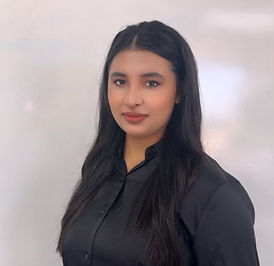
Katayoon Formul
Sacramento City College

Elijah Pascua
Cosumnes River College


Jashuwa Robinson
West Los Angeles College

Justin Boston
West Los Angeles College


Brandon Barco
Sacramento City College


Omar Aysheh
Sacramento City College

Sequin Thomas
Sacramento City College
Learning Outcomes
Building a molecule
-
Demonstrate proficiency in GaussView software to build molecules including their chemical characteristics
Submiting your first job to the supercomputer
-
Choose appropriate computational methods for specific systems (organic compounds, organometallic reagents, radicals, anions, etc.)
-
Understand and apply principles of density functional theory
-
Demonstrate proficiency in executing computational software
-
Monitor your computational calculations
Building a transition state
-
Read and understand prior literature in the field to create an initial 3D structure that resembles the geometry of your transition state
-
Locate and verify the transition state using different computational techniques
Validating the results
-
Verify the calculation results are accurate and realistic
-
Determine the energies of reactants, transition states, and products
-
Create a reaction coordinate diagram using the energies obtained from your computational calculations
Fall 2025 - Spring 2026 Class
Undergraduate Students
-
Tikka Gautam
-
Andrey J. Khodakovskiy
-
Anh D. Nguyen
-
Olivia G. Rodriguez
-
Bibi M. Muradi
-
Sequin Thomas
-
Jashuwa Robinson
-
Charles Young
-
Shaina Conliffe
-
Allan D. Godinez
-
Kimberly A. Trujillo
-
Sanvi Dalla
-
Nicholas Froehlich
-
Owen Rooney
-
Jane I. Okafor
-
Madi Cha
Mentors
-
Dr. Ángel Rentería-Gómez
-
Achyut Gogoi
-
Poulami Mukherjee
-
Memona Zafar
-
Yaning Liu
-
Macayla Guerrero
-
River Samet